
NYC Renovation Comparison Guide
Brownstone vs. Pre-War Apartment Renovation
“Pre-war” gets used loosely in New York real estate, but a Brooklyn brownstone and a Manhattan pre-war co-op apartment are genuinely different renovation projects — different structural systems, different approval processes, and different cost drivers. If you’re comparing the two, or trying to figure out what your specific property needs, here’s the real breakdown.
Brownstone vs. Pre-War Apartment Renovation — At a Glance
| Feature | Brownstone | Pre-War Apartment |
|---|---|---|
| Structure | Masonry party walls, original wood floor joists | Steel or masonry multi-unit building |
| Ownership scope | Entire structure: roof, facade, foundation | Unit interior only |
| Approval process | NYC DOB, plus LPC if landmarked | NYC DOB, co-op/condo board, plus LPC if landmarked |
| Typical cost | $150,000 – $500,000+ | $80,000 – $300,000+ |
| Typical timeline | 4 – 8 months | 3 – 6 months |
Structural Differences
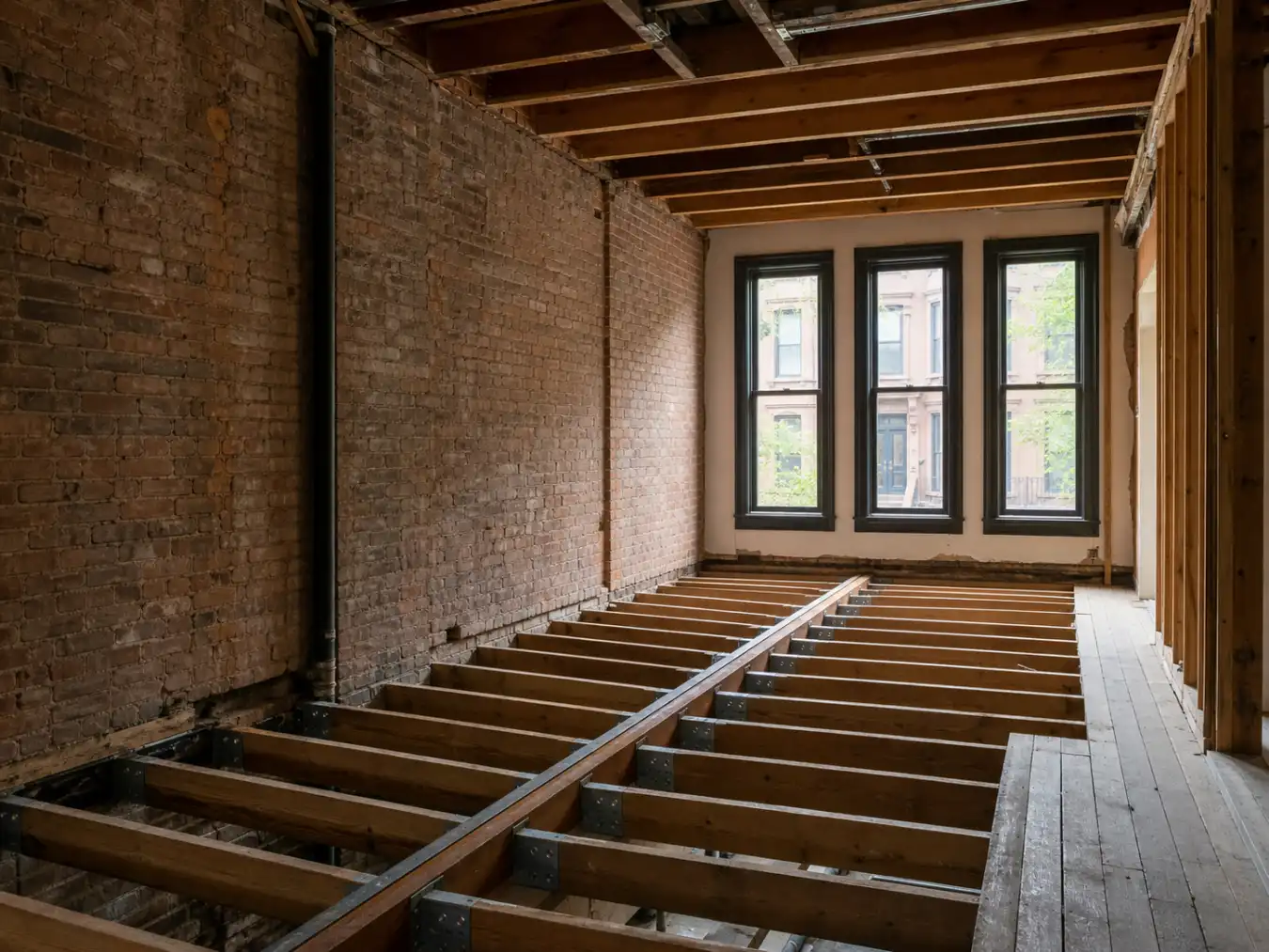
A brownstone is typically a standalone or attached townhouse, 3–5 stories, built with masonry party walls shared with neighboring buildings and original wood floor joists running the depth of the house. A pre-war apartment sits inside a larger multi-unit building — steel or masonry construction — where your unit is one part of a much bigger structural system, and changes are more tightly controlled by the building itself.
This means brownstone renovations often involve joist repair, party wall considerations, and foundation evaluation — work an apartment renovation rarely touches. Apartment renovations, on the other hand, are more constrained by what the building’s structure and risers allow, since you can’t modify shared structural elements the way a brownstone owner can within their own building.
Ownership and Responsibility
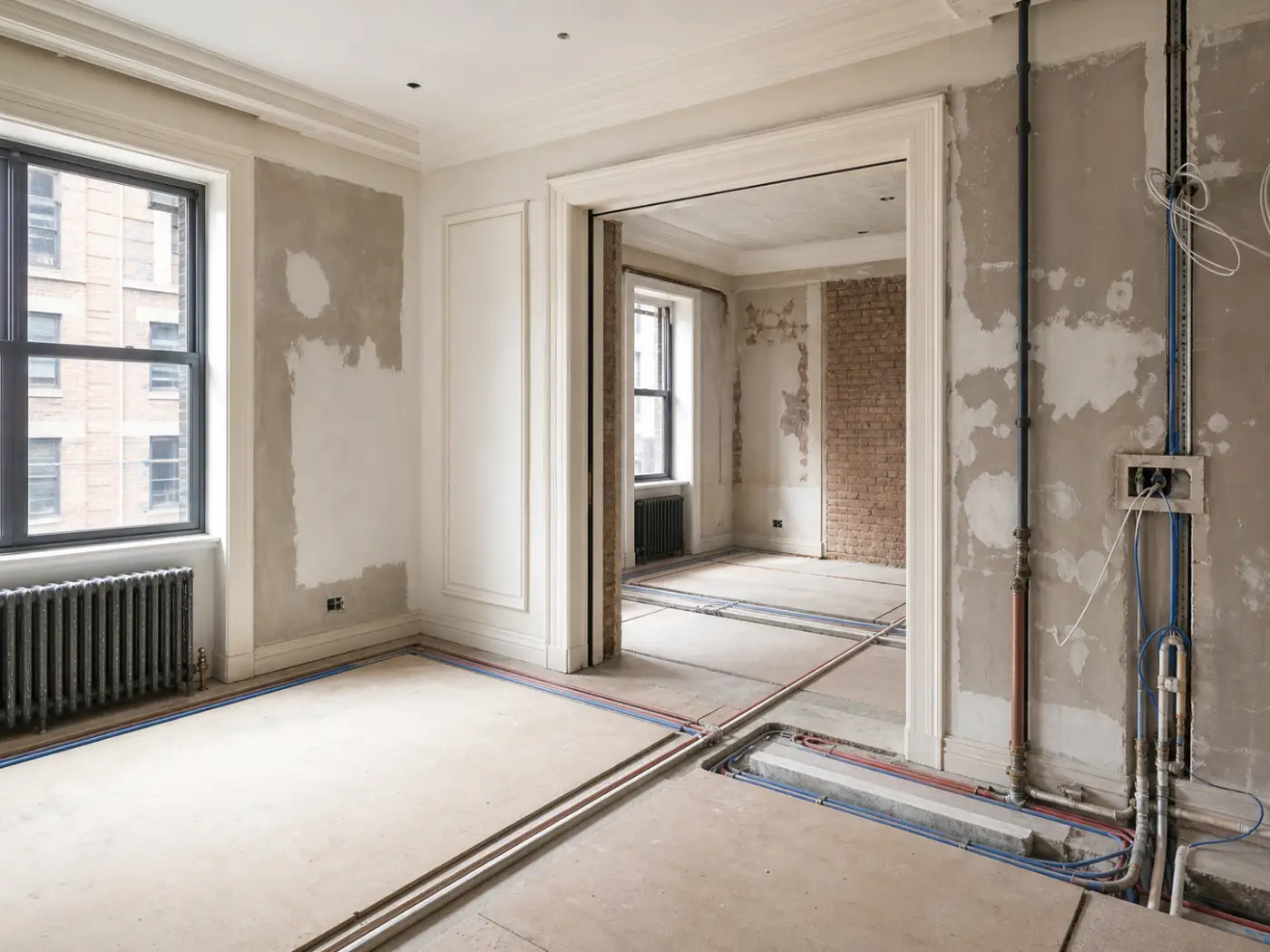
As a brownstone owner, you’re typically responsible for the entire structure — roof, facade, foundation, and every floor. As an apartment owner in a pre-war building, your renovation responsibility usually stops at your unit’s walls; the building itself handles the roof, facade, and shared systems, though you still need board approval for anything that touches shared infrastructure like risers or load-bearing walls.
Approval Process
Brownstone owners typically deal directly with the NYC Department of Buildings and, if in a historic district, the Landmarks Preservation Commission — but there’s no co-op board layered on top. Pre-war apartment owners usually answer to both DOB permitting and a co-op or condo board’s own alteration agreement, which often means additional drawings, insurance requirements, and board-specific rules before construction can start. Our Upper East Side and Tribeca clients navigate this board process regularly.
Landmark and Exterior Considerations
Many brownstone neighborhoods — including Park Slope and Brooklyn Heights — sit within designated historic districts, which means facade work, windows, and street-visible elements require Landmarks Preservation Commission approval. Pre-war apartment buildings can also fall under landmark rules (parts of the West Village, for example), but as an individual apartment owner, you’re rarely dealing with facade approval directly — that’s the building’s responsibility, not yours.
Cost Differences
Brownstone renovations often carry additional cost for structural work, facade repair, and LPC compliance that an apartment renovation doesn’t require — see our Brownstone Renovation page for typical ranges. Apartment gut renovations, covered in detail on our Gut Renovation page, tend to have costs driven more by finish level and system replacement than structural work.
Timeline Differences
A brownstone renovation involving structural and facade work typically runs 4–8 months given LPC review timelines and the scope of exterior repairs. A pre-war apartment gut renovation typically runs 3–6 months, with co-op board approval — rather than landmark review — usually the biggest variable in how quickly construction can start.
Which One Are You Renovating?
If you own a brownstone, expect a project centered on structural condition, facade compliance, and full control over your building’s interior and (within landmark rules) exterior. If you own a pre-war apartment, expect a project shaped by your board’s alteration agreement and your building’s shared systems. Either way, a contractor experienced in both building types — not just one — is worth the extra question in your interview process.