
Yes, if the existing waterproofing and plumbing are in good condition. However, once tile comes off a wall or floor in an older building, it’s common to discover deteriorated waterproofing underneath — worth budgeting a contingency for this possibility.
2026 NYC Bathroom Renovation Cost Guide
Bathroom Renovation Cost in NYC: What to Expect in 2026
A bathroom renovation in New York City typically costs $12,500–$50,000+, depending on whether it's a cosmetic refresh or a full gut-to-the-studs renovation with waterproofing and plumbing relocation. Most full bathroom renovations in NYC fall between $25,000 and $35,000 and take 3–8 weeks.
Bathrooms pack more technical complexity per square foot than almost any other room in a home — plumbing, electrical, ventilation, and waterproofing all have to work together correctly, and a mistake in any one of them can mean a leak into the unit below. That complexity is also why bathroom renovation quotes vary so widely. This guide breaks down real cost ranges and the specific factors that separate a $15,000 bathroom from a $45,000 one.
Bathroom Renovation Cost by Type
| Renovation Type | What’s Included | Typical Timeline | Starting Price |
|---|---|---|---|
| Powder room refresh | Cosmetic update — fixtures, paint, vanity swap | 1–2 weeks | $12,500 |
| Standard remodel | New tile, vanity, fixtures, lighting (layout unchanged) | 3–5 weeks | $25,000 |
| Full gut renovation | Demolition, waterproofing, tile, plumbing & electrical relocation | 5–8 weeks | $35,000 |
| Luxury primary bath | Custom finishes, premium fixtures, heated floors, custom shower | 6–10 weeks | $50,000+ |
All prices are starting reference points, not quotes. See our Bathroom Remodel & Renovation page for full scope details, or request a free on-site estimate.
What Drives Bathroom Renovation Cost
- Waterproofing. This is the single most important — and most invisible — part of the cost. Proper membrane systems and correct floor slope toward the drain prevent leaks into the unit below, which is why cutting corners here is the leading cause of bathroom renovation failures. It’s not a place to save money.
- Plumbing relocation. Keeping fixtures in their existing locations is significantly cheaper than moving a tub, shower, or toilet to a new wall, which requires rerouting supply and drain lines — sometimes through existing chases, sometimes requiring more invasive work depending on the building.
- Tile and fixtures. Custom tile layouts, natural stone, and premium fixtures (rainfall showerheads, freestanding tubs, heated flooring) all add cost above standard porcelain tile and mid-range fixtures.
- Ventilation upgrades. Many older NYC bathrooms have inadequate exhaust fans. Upgrading ventilation — essential for preventing mold — is a smaller line item but one that’s frequently skipped by lower-bid contractors.
- Building age. Pre-war buildings often have original galvanized plumbing behind bathroom walls that needs replacement regardless of whether you planned to touch it, which can add cost once demolition reveals the actual condition of the pipes.
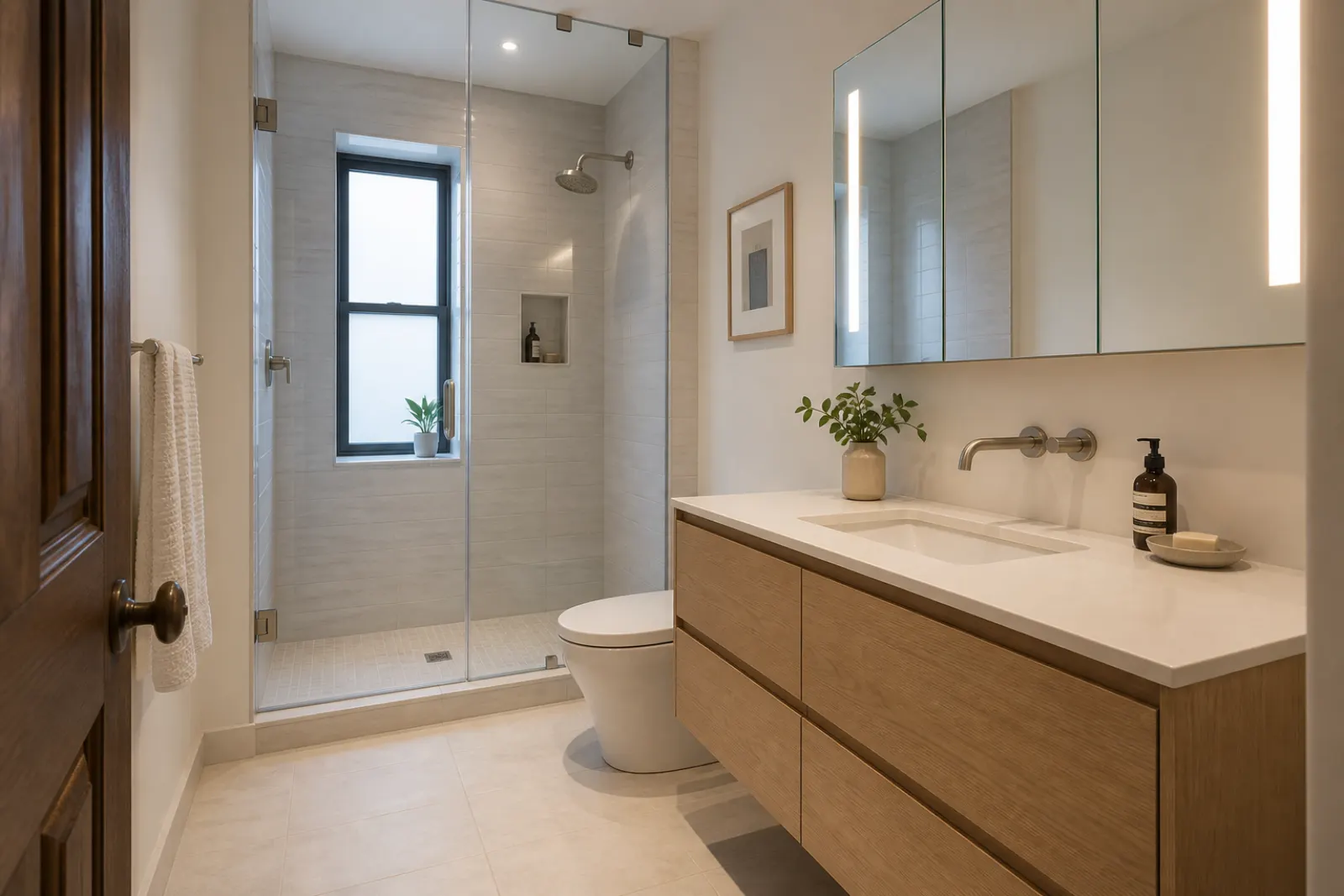
Bathroom Renovation Timeline
| Phase | Typical Duration |
|---|---|
| Design & fixture selection | 1–2 weeks |
| Demolition | 2–4 days |
| Plumbing & electrical rough-in | 3–5 days |
| Waterproofing & curing | 5–7 days (never rush this) |
| Tile installation & grouting | 1–2 weeks |
| Fixture installation & final details | 3–5 days |
Waterproofing membranes and mortar beds need proper curing time before tile goes down, and tile needs to cure before grouting. Contractors who compress this schedule to hit a faster completion date are the ones whose bathrooms leak within a year or two.
Do You Need a Permit for a Bathroom Renovation in NYC?
Permits are generally required when plumbing lines are relocated, walls are removed, or new electrical circuits are added. Cosmetic updates that keep fixtures in place typically don’t require a DOB permit, but co-op and condo boards almost always require an alteration agreement regardless. Our permits guide covers what triggers a filing across renovation types, and our co-op renovation guide walks through board approval specifically.
Small Bathroom vs. Full Master Bathroom Renovation Cost
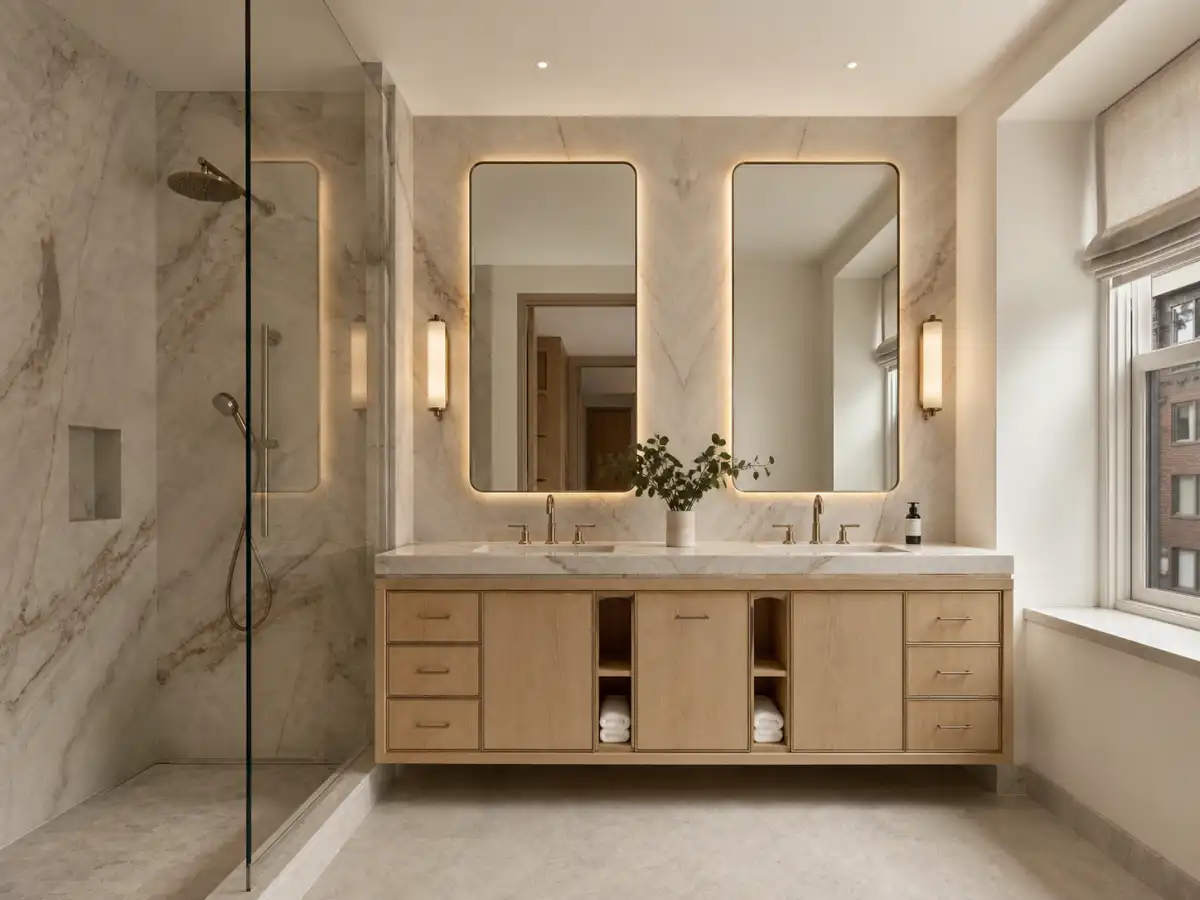
A small powder room or guest bathroom is typically the fastest, most cost-effective renovation, focused mainly on fixtures and finishes within a fixed footprint. A full master bathroom renovation often involves reconfiguring the layout entirely — relocating plumbing, adding a double vanity, installing a walk-in shower or heated floors — which pushes both cost and timeline meaningfully higher. Understanding which category your project falls into early helps set realistic budget expectations before you start collecting quotes.
Why Bathroom Quotes Vary So Much Between Contractors
A lower quote often means one of three things: a smaller-capacity or lower-grade waterproofing system, an allowance-based tile/fixture budget that will grow once you actually pick materials, or unlicensed plumbing and electrical work that won’t pass inspection. Ask any contractor quoting your bathroom renovation to specify the waterproofing system by name and to itemize plumbing, electrical, tile, and fixtures separately — vague “bathroom package” pricing is where surprise costs hide.
Frequently Asked Questions
Can I renovate just my bathroom’s tile without a full gut renovation?
How long does it take to waterproof a bathroom properly?
Proper waterproofing, including cure time for membranes and mortar beds, typically adds 5–7 days to a renovation timeline. This is not a step to compress for a faster completion date.
What’s the most expensive part of a bathroom renovation?
Custom tile work and plumbing relocation are typically the two largest cost drivers, followed by premium fixtures and, in luxury renovations, heated flooring systems.
Do I need a licensed plumber for a bathroom renovation in NYC?
Yes — any plumbing work is required by law to be performed by a licensed plumber, and unlicensed plumbing work is one of the most common reasons renovations fail inspection or void insurance coverage.
Is it cheaper to keep my bathroom’s existing layout?
Yes, significantly. Keeping fixtures in their current locations avoids the cost of relocating supply and drain lines, which is one of the largest layout-change expenses in any bathroom renovation.