
At that budget, expect a cosmetic refresh — new cabinet fronts or painted cabinetry, updated hardware, new countertops on existing cabinet boxes, and paint — rather than new cabinetry, plumbing relocation, or layout changes.
2026 NYC Kitchen Renovation Cost Guide
Kitchen Renovation Cost in NYC: What to Expect in 2026
A kitchen renovation in New York City typically costs $15,000–$85,000+, depending on whether you're refreshing finishes or doing a full gut renovation with layout changes. The three biggest cost drivers are cabinetry (custom vs. semi-custom), whether plumbing or gas lines move, and countertop material.
Kitchens are consistently the most-searched renovation project in NYC, and for good reason — they’re also the room where cost estimates vary the most between contractors. A quote that looks like a bargain often excludes demolition, electrical upgrades, or “the tile allowance,” which then reappear as change orders once work begins. This guide breaks down real cost ranges by renovation type, what’s actually included at each price point, and the factors that move your number up or down.
Kitchen Renovation Cost by Project Type
| Renovation Type | What’s Included | Typical Timeline | Starting Price |
|---|---|---|---|
| Cosmetic refresh | Cabinet refacing/painting, new hardware, paint, lighting | 1–2 weeks | $15,000 |
| Standard remodel | New cabinetry, countertops, flooring, updated electrical/plumbing | 4–6 weeks | $35,000 |
| Full renovation | Full demolition, layout changes, new cabinetry, electrical, plumbing, finishes | 6–10 weeks | $55,000 |
| High-end custom | Custom cabinetry, premium stone, extensive MEP and layout work | 10–14 weeks | $85,000+ |
All prices are starting reference points, not quotes. See our Kitchen Remodeling page for what’s included at each level, or request a free on-site estimate for pricing specific to your kitchen.
What Actually Drives Kitchen Renovation Cost
- Cabinetry. This is usually the single largest line item. Stock cabinets are the most affordable option; semi-custom cabinetry balances cost and personalization; fully custom cabinetry — often necessary in NYC’s irregular pre-war kitchen layouts — costs the most but maximizes storage in tight footprints.
- Countertops. Quartz is the most common mid-to-high-end choice because it’s low-maintenance and consistently patterned. Natural stone (marble, granite) costs more and requires sealing. Butcher block and laminate sit at the lower end.
- Plumbing and gas relocation. Moving a sink, dishwasher, or range to a new wall means new supply and drain lines, and often a new gas line run — all of which must be performed by licensed trades and, in many buildings, permitted separately.
- Layout changes. Removing a wall between the kitchen and living area — one of the most requested upgrades in NYC apartments — requires confirming whether that wall is load-bearing. If it is, expect engineering and structural permit costs on top of the renovation itself.
- Building type. Pre-war buildings often hide outdated wiring or non-standard framing behind kitchen walls, which can add cost once demolition begins. Newer construction tends to have more predictable systems.
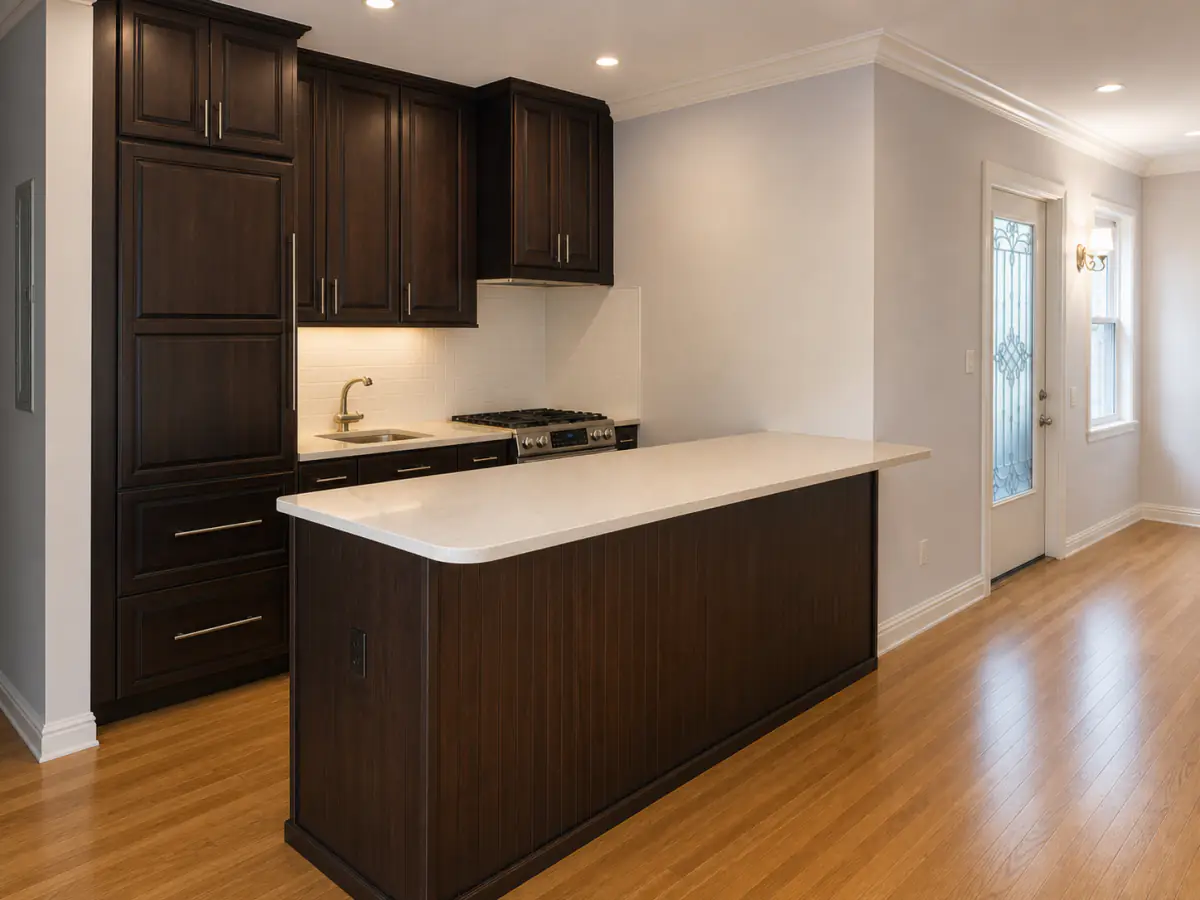
Kitchen Renovation Timeline by Phase
| Phase | Typical Duration |
|---|---|
| Design & material selection | 2–4 weeks |
| Demolition | 2–4 days |
| Rough-in (electrical, plumbing, gas) | 1–2 weeks |
| Cabinetry & countertop installation | 1–3 weeks (fabrication lead time affects this) |
| Finishes & final punch list | 1 week |
Custom cabinetry and stone fabrication are usually the schedule’s long pole — ordering early, once your layout is finalized, keeps your project moving instead of waiting on materials mid-renovation.
Do You Need a Permit to Remodel a Kitchen in NYC?
A Department of Buildings permit is generally required when plumbing or gas lines are relocated, walls are removed, or new electrical circuits are added. Kitchens that keep appliances and plumbing in their existing footprint may only need a cosmetic-work filing. Co-op and condo boards typically require an alteration agreement and proof of contractor insurance regardless of permit type — see our guide on renovating a co-op apartment in NYC for what that process involves. For a broader look at what triggers a DOB filing across project types, see our NYC renovation permits guide.
How to Avoid Kitchen Renovation Cost Overruns
The most common cause of a kitchen budget spiraling isn’t bad luck — it’s an initial quote that didn’t account for real site conditions. A contractor who prices your kitchen without opening a wall or checking your panel capacity is pricing a generic kitchen, not yours. Ask for an itemized quote that separates demolition, rough-in, cabinetry, countertops, and finishes as distinct line items, and confirm in writing what happens if hidden conditions (old wiring, deteriorated plumbing) are found once work starts.

Kitchen Renovation Cost: NYC vs. National Averages
NYC kitchen renovations typically run 30–60% higher than national averages for comparable scope, driven by labor costs, building access logistics (elevator scheduling, narrow stairwells, co-op work-hour restrictions), and stricter code requirements. Homeowners researching national cost guides should expect New York numbers to sit well above them — a $25,000 national “average kitchen remodel” figure rarely reflects what the same scope costs in Manhattan or Brooklyn.
Frequently Asked Questions
Is a $20,000 kitchen renovation realistic in NYC?
How much does it cost to move a kitchen sink in NYC?
Relocating a sink typically adds several thousand dollars once you factor in new supply and drain lines, potential floor opening, and permit filing if walls are involved. Your contractor should quote this as a specific line item, not bundle it into a vague “plumbing allowance.”
Does a kitchen renovation increase resale value in NYC?
In most NYC markets, a well-executed kitchen renovation is one of the higher-return projects a homeowner can undertake, particularly when it opens the layout or modernizes an outdated pre-war kitchen. Return varies by neighborhood and finish level.
Can I stay in my home during a kitchen renovation?
For a standard or cosmetic remodel, often yes, with a temporary kitchen setup elsewhere in the unit. For a full renovation involving plumbing and gas relocation, most homeowners find it more practical to be out during the active demolition and rough-in phases.
What’s the difference between a kitchen remodel and a kitchen renovation?
The terms are often used interchangeably, but “remodel” usually implies working within the existing layout, while “renovation” more often includes structural or layout changes. Our Kitchen Remodeling page covers the full range of both.